


Invisalign Consultations: A Real Provider Review
You can learn a lot about your future Invisalign result in the first 20 minutes - not from the before-and-after photos, but from what the provider measures, what they refuse to promise, and how they explain your options when the case is not “textbook.” That is what a useful invisalign provider consultation review should focus on: clinical decision-making, not sales energy.
A great consultation leaves you feeling calm and informed. A weak one often leaves you with a price, a timeline that sounds too perfect, and a vague sense that you did not get the full story. Here is how to review an Invisalign provider consultation the way a specialist team does - with patient-friendly language, but the same clinical standards.
What a strong Invisalign consultation should include
A consultation is not just a quick look at your teeth and a “yes, you’re a candidate.” It is a diagnostic visit. At minimum, the provider should evaluate tooth alignment and bite together, because straight teeth are not automatically a stable bite.
You should expect a careful discussion of what is bothering you (crowding, gaps, an overbite, relapse after braces, grinding, shifting, or cosmetic concerns for photos and work). The provider should then translate that into orthodontic goals: how teeth will be moved, how the bite will be managed, and how stability will be protected after treatment.
The best consultations are also honest about trade-offs. Invisalign can be excellent for many adult cases, but some movements are more predictable than others. If the provider never mentions limits or alternatives, your “review” should note that as a gap, not a positive.
The diagnostics that separate a serious consult from a quick pitch
Clear aligner planning is only as good as the records. A high-quality provider will typically rely on a digital scan (rather than messy impressions) and supplement it with photos and X-rays as appropriate. The goal is to see the roots, bone support, and any hidden issues that could complicate movement.
If you have existing dental work (crowns, veneers, implants) or missing teeth, the consult should address how aligners interact with those realities. Implants do not move like natural teeth. Veneers can change how attachments bond. Crowns may affect grip and tracking. None of these are dealbreakers, but they do require planning.
A consultation is also the right time to screen for gum health. If gums are inflamed or bone levels are compromised, orthodontic movement may need to be delayed or coordinated with periodontal care. A provider who skips this step may be optimizing for speed, not safety.
The questions a good provider asks you
A strong Invisalign consultation feels two-sided. You are not being “processed.” You are being evaluated as a person with habits and constraints that affect outcomes.
Expect questions about how many hours you can realistically wear aligners, whether you travel frequently, whether you drink coffee or tea throughout the day, and whether you grind or clench. You may also be asked about past orthodontic treatment and whether you wear (or lost) your retainers.
If the provider never asks about compliance, it is a red flag. Invisalign works best when aligners are worn consistently - usually close to full-time wear except when eating and brushing. The consultation should make that expectation clear, without shaming or pressure.
What your invisalign provider consultation review should evaluate
Think of your review as an assessment of clarity, not charm. These are the areas that matter most.
1) Did you get a diagnosis, not just a label?
“Crowding” is not a diagnosis by itself. A provider should explain whether the crowding is related to arch size, tooth size, bite relationship, or shifting from missing teeth or retainer lapse. If you have an overbite or crossbite, they should explain what that means functionally and cosmetically.
When you walk out, you should be able to describe the problem in one or two sentences in your own words. If you cannot, the consult likely moved too fast.
2) Did they explain what Invisalign can and cannot do in your case?
This is where credibility shows. Some tooth movements are more challenging, and some bite corrections may require additional tools like elastics, attachments, or minor enamel reshaping (interproximal reduction). A good provider explains why those tools help and what they feel like day to day.
If you are seeking a very specific cosmetic goal - for example, closing a front gap without changing the bite too much - the provider should discuss stability. Teeth can be moved to look great and still relapse if the bite forces are not addressed or retainers are not planned correctly.
3) Were timelines and “number of aligners” presented as estimates?
Aligner count and time can change. Refinements are common and not inherently a sign of failure. Your review should note whether the provider set expectations realistically: that treatment is monitored and adjusted, and that biology does not always follow a perfect schedule.
Be cautious of consultations that guarantee an unusually short timeline without explaining how that is possible. Speed can be achieved in some cases, but it should come with a clinical rationale.
4) Did they discuss attachments, elastics, and refinements upfront?
Many patients are surprised by attachments - small tooth-colored shapes placed on teeth to help aligners grip and move teeth more predictably. A thorough consult shows you where attachments may go and explains how visible they might be.
If elastics are likely, you should be told. If refinements are likely, you should be told. Feeling “surprised” later usually means the consult prioritized persuasion over preparation.
How to judge the provider, not just the product
“Invisalign provider” is not a single experience. Training, case selection, and monitoring protocols vary. A strong consultation should make the team’s approach obvious.
Pay attention to who is leading the plan. Is it a dentist who regularly manages clear aligner cases, or an orthodontist with specialist training focused on bite and facial balance? For complex bites, significant rotations, or relapse with functional issues, specialist oversight often adds safety and predictability.
Also notice how follow-ups are described. Invisalign is not a set-it-and-forget-it treatment. Your provider should talk about visit frequency, what they check (tracking, bite contacts, gum health), and what triggers changes to the plan.
Comfort matters too. A premium practice is not just nicer furniture. It is a calm workflow, clean clinical protocols, and clear communication that reduces stress - especially for patients who feel anxious about dental visits.
The most useful questions to ask during your consultation
You do not need a long checklist, but you do want a few direct questions that reveal the provider’s planning depth.
Ask who designs and approves the treatment plan, and how bite changes are managed. Ask what happens if a tooth is not tracking - do they rescan, change aligner wear time, add attachments, or adjust sequencing? Ask what retention looks like at the end: fixed retainer, removable retainer, or both, and why.
If you have veneers, implants, or a history of gum issues, ask how those factors change the plan and monitoring. A confident provider welcomes these questions and answers without defensiveness.
Pricing and value: what “transparent” really looks like
Fees vary by complexity and by what is included. A high-quality consult should explain what the quote covers: records, aligners, attachments, planned refinements, checkups, retainers, and any likely add-ons.
It also should be clear about what is not included, such as fillings, gum treatment, or cosmetic bonding that might be recommended after alignment. Alignment can set the stage for cosmetic finishing, but it should not be bundled in a confusing way.
If a consultation feels like it is hiding the ball - for example, a low headline price with vague “extras later” - that belongs in your provider consultation review.
When a provider should recommend something other than Invisalign
A credible consultation sometimes ends with “Invisalign is not your best option,” or “It depends on your priorities.” That is not a failure. It is a sign the provider is protecting your outcome.
You may be steered toward braces if the case requires very precise root control, significant bite correction, or if compliance is realistically going to be difficult. You may be advised to address gum disease first, replace missing teeth, or stabilize grinding with a night guard.
You can still choose Invisalign in many of these situations, but the consult should lay out the consequences of each choice in plain language.
A note for patients in Muscat choosing a premium clinic
For families and working professionals balancing schedules, the best Invisalign experience is usually the one that feels coordinated: digital scanning, clear follow-up cadence, and a team that can handle the “what if” moments without sending you elsewhere. Clinics that combine comprehensive dentistry with specialist orthodontic oversight can be especially helpful when aligner treatment intersects with cleanings, restorations, crowns, or cosmetic finishing.
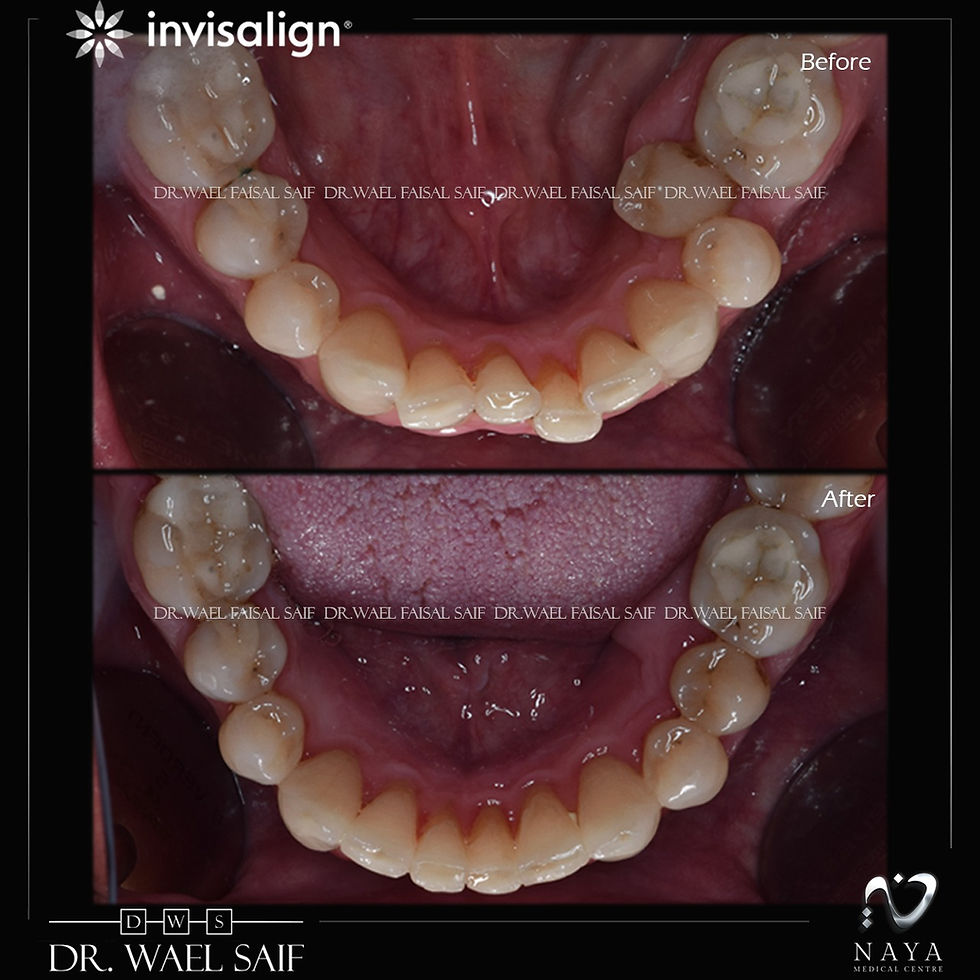
If you are looking for that kind of end-to-end approach, you can explore Invisalign care at Naya Medical Centre and review the team’s specialist credentials before you book.
A good consultation does not just tell you that Invisalign can straighten teeth. It shows you a plan that respects your biology, your calendar, and your comfort - and leaves you feeling like the next step is your decision, not their closing line.


Comments